If Big Island home prices have made you pause, Puna may be the part of the map worth a closer look. Many buyers want more space or a lower entry point, but they also want to understand what daily life and long-term ownership really look like before making a move. In 96778, which centers on Pāhoa in the Puna district, you can find a market that is often more accessible than Hilo or Hawaiʻi County overall, along with a mix of homes, land, and important practical trade-offs. Let’s dive in.
Why 96778 stands out
Pāhoa’s 96778 ZIP code sits in Hawaiʻi County’s Puna district on the east side of Hawaiʻi Island. County planning describes Puna as east-central Hawaiʻi Island, bordered by Hilo to the northwest, Kaʻū to the west, and the ocean to the east and south. That location helps explain why buyers often look here when they want a different price point than more urban parts of the island.
For many people, the appeal starts with affordability by Big Island standards. Recent market data shows a median listing price of $335,000 in 96778, compared with $545,000 in Hilo and about $635,000 countywide. That puts 96778 roughly 39% below Hilo and 47% below the Hawaiʻi County median listing price.
That does not mean Puna is one flat, bargain market. It is better understood as a district with a range of price points, property types, and neighborhood patterns. If you are exploring budget-friendly Big Island living, that variety can be a real advantage.
What budget-friendly really means
The phrase "budget-friendly" can mean different things depending on your goals. In 96778, it often means a lower entry price than other East Hawaiʻi options, not necessarily a rock-bottom cost across the board. You are still shopping in an active market, not a hidden corner with no demand.
Current data points to a buyer-leaning market with about 410 homes for sale, a median price per square foot of $302, and a median of 74 days on market. Median rent is around $1,925 per month, which also gives you a useful frame of reference if you are comparing buying versus renting. For some buyers, those numbers create room to be more selective and thoughtful.
This can be especially helpful if you are buying your first home, looking for land, or trying to balance monthly costs with long-term ownership. A broader range of pricing may give you more ways to enter the market without stretching into the higher median prices seen elsewhere on the island.
Housing options in Puna
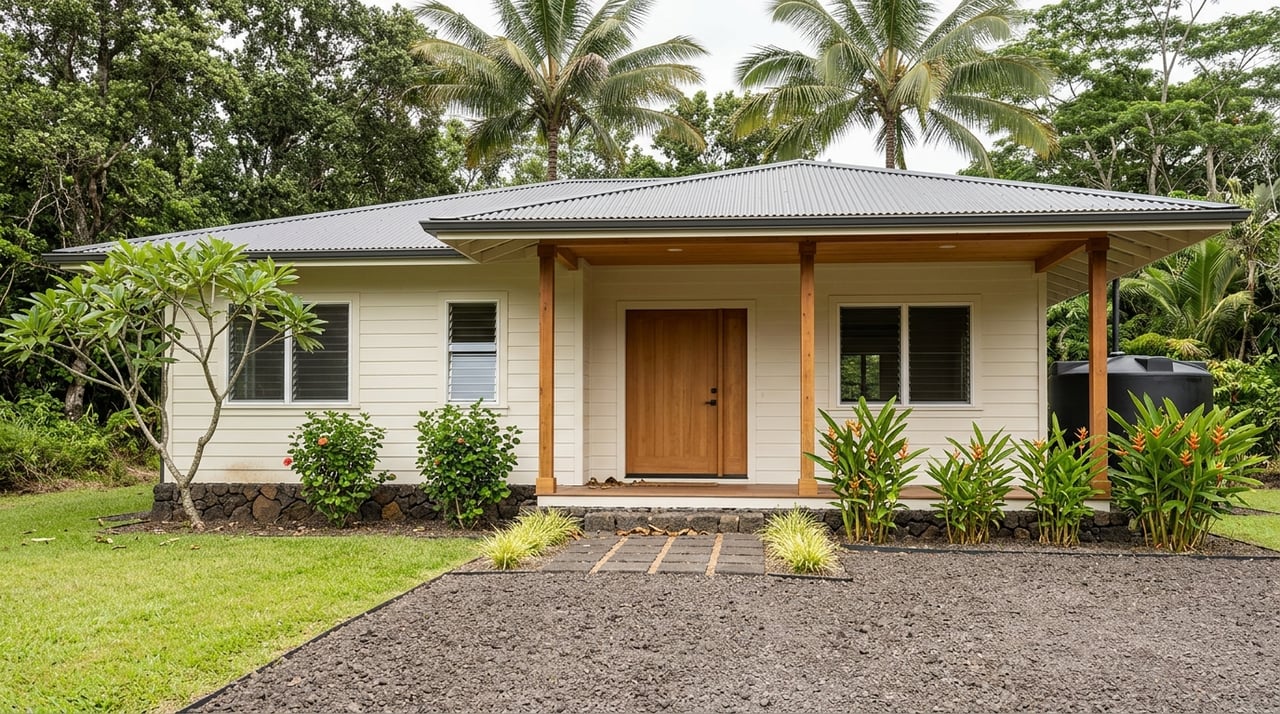
One reason 96778 draws attention is the range of property types available. Detached single-family homes are common, and recent inventory examples include homes from about 700 to 1,680 square feet. These examples include 2- to 4-bedroom layouts on lot sizes ranging from about 7,999 square feet to 1 acre.
That gives you options if you want a smaller home with less upkeep or a larger lot with more breathing room. It also means you may see homes with very different layouts, ages, and land use patterns from one area to the next. In Puna, comparing properties carefully matters.
Land is also a major part of the market. Active listings have included standard subdivision parcels around 8,040 to 9,380 square feet, plus 0.35-acre lots and much larger rural tracts such as 8.75 acres, 19.84 acres, and even 104.34 acres. If you are interested in unimproved land, 96778 gives you more opportunities than many buyers expect.
Prices vary by subdivision
Puna is not one uniform market, and that is important to know early in your search. Recent neighborhood-level figures show areas such as Hawaiian Beaches around $320,000, Ainaloa around $375,000 to $385,000, and Hawaiian Paradise Park around $547,000. Those differences can shape what you get for your budget.
This variation is one reason broad market averages only tell part of the story. Two homes in the same ZIP code may offer very different lot sizes, utility setups, road access, and pricing. Looking at the subdivision level can help you set realistic expectations and narrow your search faster.
If your goal is affordability, that does not always mean choosing the cheapest listing. It often means finding the best fit between price, property condition, lot type, and your comfort with the realities of ownership in that specific area.
Daily life in and around Pāhoa
Budget matters, but so does how a place works for your day-to-day routine. Pāhoa serves as a key village center in lower Puna, and the County’s Pāhoa Village Master Plan treats it as an important focus for infrastructure, environmental management, transit, and community engagement. That makes Pāhoa more than just a dot on the map.
For everyday amenities, the area includes the Pāhoa Aquatic Center at William “Billy” Kenoi District Park. Transit is also part of the picture. Hawaiʻi County’s transit agency runs Route 40 between Hilo and Pāhoa, along with local routes 401 to 403, and there is an interim transfer hub at Puna Kai Shopping Center.
For some buyers, that village-center role adds value over time. It can support daily errands, transportation access, and a stronger sense of how the area may continue to evolve under county planning efforts.
Ownership trade-offs to understand
Lower entry prices can come with more property-specific homework. In Puna, one of the biggest issues to understand is water service. County planning reports note that water service is uneven across the district and that most residents use individual water catchment systems.
That means not every property will have the same utility setup. The same county report notes that the Hawaiian Beaches subdivision is served by a privately owned water system. If you are comparing neighborhoods, utility differences like this can affect your comfort level, maintenance planning, and monthly expectations.
Wastewater is another key item to verify early. Hawaiʻi County guidance says owners who are accessible to public sewer must connect at their own expense, so buyers should confirm whether a parcel uses sewer, septic, or another on-site system. This is one of those details that can influence both your upfront planning and long-term ownership costs.
Questions to ask before you buy
When you explore 96778, it helps to think beyond the list price. A lower purchase price may be appealing, but the right property is one that fits both your budget and your day-to-day needs. Before making an offer, consider asking questions like these:
- What type of water service does this property use?
- Is the property on public sewer, septic, or another on-site system?
- How large is the lot, and what level of upkeep will it require?
- How does this subdivision compare with others in Puna on price and property type?
- How close is the property to Pāhoa’s services, transit routes, and daily amenities?
These are practical questions, but they can make a big difference in how confident you feel about your decision. In a district with varied infrastructure and housing patterns, local guidance can be especially valuable.
Is Puna right for your budget?
Puna can be a smart place to look if you want a more accessible path into Big Island ownership. The 96778 market offers a lower median listing price than Hilo and Hawaiʻi County overall, along with a wide mix of homes and land. For buyers who value flexibility, that can open doors.
At the same time, budget-friendly living here is not just about finding a lower sticker price. It is about choosing a property that matches your lifestyle, your tolerance for service variability, and your long-term plans. The right fit often comes from balancing affordability with a clear understanding of the property itself.
If you are thinking about buying in Puna, having a local-minded real estate partner can help you sort through those details with more confidence. Whether you are comparing first homes, land opportunities, or investment property options, Tracy Kalama and the team at Millennium Realty bring the kind of steady, practical guidance that helps you make informed decisions in Hawaiʻi’s unique market.
FAQs
What makes 96778 more affordable than Hilo?
- Recent market data shows a median listing price of $335,000 in 96778 compared with $545,000 in Hilo, making Pāhoa’s ZIP code a lower entry-price option within East Hawaiʻi.
What types of properties are common in Puna 96778?
- You will often find detached single-family homes, subdivision lots, and larger rural land parcels, with home sizes in recent listings ranging from about 700 to 1,680 square feet.
What should buyers in Puna ask about water service?
- Buyers should verify whether a property uses an individual water catchment system, a private water system, or another setup, because water service varies across Puna.
What should buyers in Puna verify about wastewater?
- Buyers should confirm whether a specific property is connected to public sewer, uses septic, or depends on another on-site system, since connection requirements can affect costs.
Does Pāhoa have daily amenities and transit?
- Yes. Pāhoa includes amenities such as the Pāhoa Aquatic Center, and Hawaiʻi County transit runs Route 40 between Hilo and Pāhoa plus local routes 401 through 403.
Is Puna a good place to look for land on the Big Island?
- Puna offers a notable range of land listings, from subdivision-sized lots to much larger acreage, making it a strong area to explore if land is part of your buying plan.