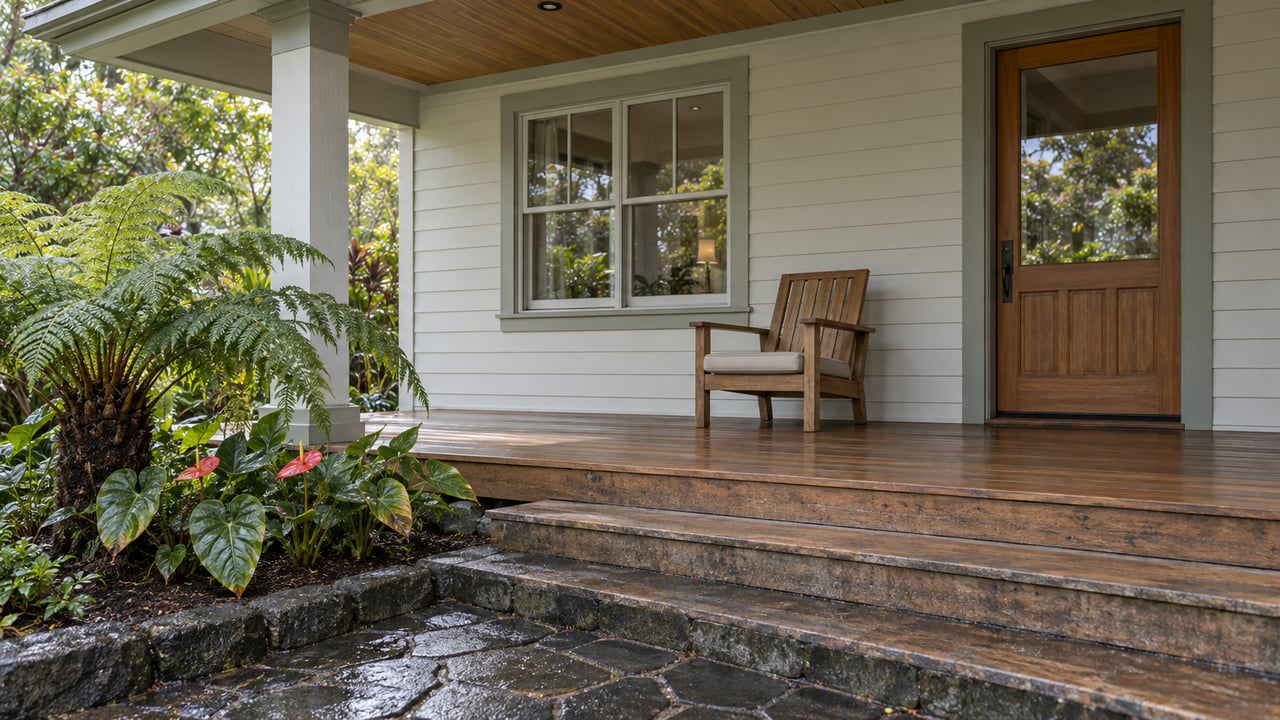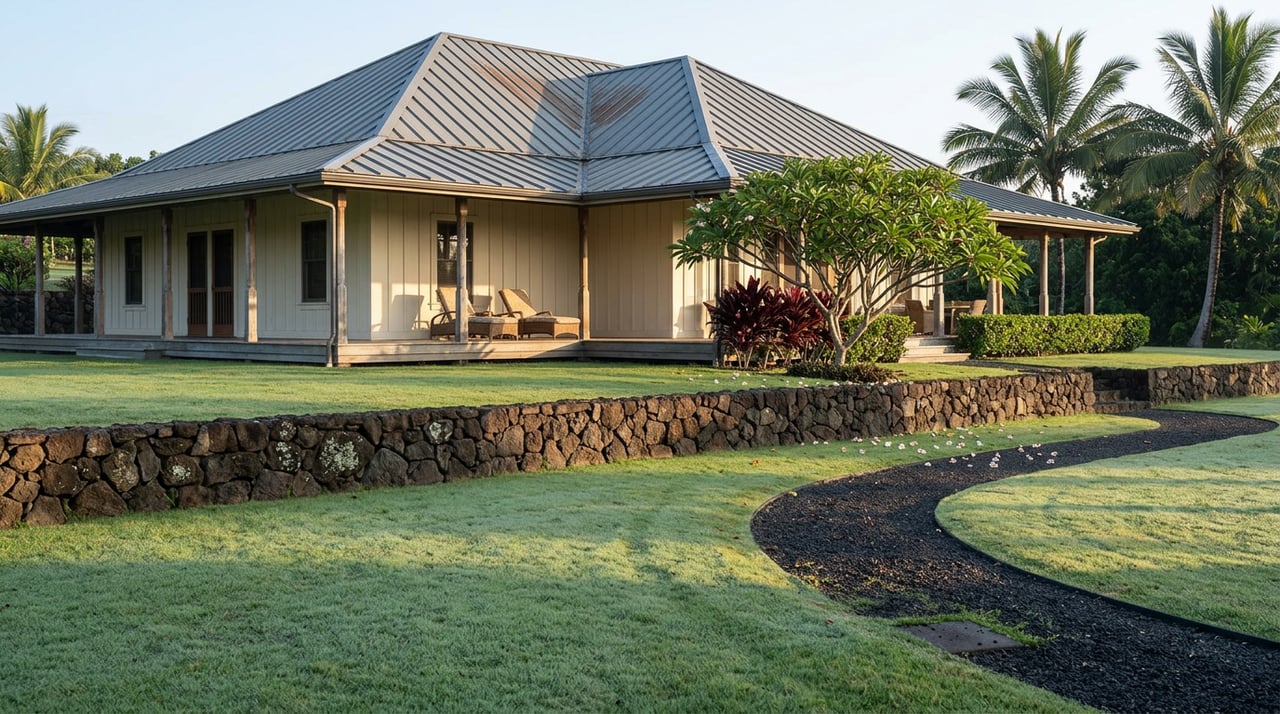
Picture two parcels on the same road in Lower Kula. Both sit around 2,300 feet, both frame a clean shot of Haleakala, both come zoned agricultural. One is a full two acres. The other is well under an acre. On paper, the smaller lot should cost less. In practice, the smaller lot is often the one that moves faster and closes at a stronger price, because somewhere in its title history sits a county water meter, already installed, already paid for, already attached to that specific tax map key. The larger lot has a name on a list instead.
That's the part of buying Upcountry land that doesn't show up in the acreage line, and it's the piece worth understanding before you fall for a view.
The list closed in 2013. It's still the list.
According to Maui County Engineering Division, the Upcountry Water System, the water utility that serves Kula, Makawao, Pukalani, Haliimaile, and parts of Haiku, has not accepted a new application for its Priority List since January 1, 2013. If your name isn't already on it, you can't add it. If it is on it, you're waiting behind people whose applications date back decades. A 2022 update on the list showed the top applicant's priority date still sitting in January 2003, nearly twenty years old at the time and no closer to a hookup.
According to Maui Now, as of late 2025, the county's Department of Water Supply reported 1,424 applicants on that list seeking a combined 3,612 meters, a number that includes people wanting a first meter, a second meter for a subdivision, or a larger meter to replace an undersized one. As The Maui News reported, Director John Stufflebean told residents at a community meeting at the Hannibal Tavares Community Center in Pukalani that peak Upcountry demand runs about 10.1 million gallons a day against a reliable supply of roughly 9.7 million gallons. The system is already short before a single name on the waitlist gets served.
That's the mechanism buyers miss. A vacant lot without a meter isn't waiting on paperwork. It's waiting on physical capacity that doesn't exist yet, and the queue in front of it has a two-decade head start.
What's actually coming online, and who it's for
The county's plans have been reported by Maui Now and The Maui News. Filter upgrades at the Kamole treatment plant, the system's main facility since 1998, are expected to lift capacity from about 4 million to 5.5 million gallons a day. Two new reservoirs near Kamole, with a combined capacity of 140 million gallons, are in the design phase, budgeted at $1.4 million for design and roughly $25 million for construction, with the county pursuing federal funding to help cover it. Long-range planning also includes as many as six new wells in the Makawao aquifer, at sites named Piiholo, Hokunui, Kealanoa, Kalialinui, Kula Kai, and Kula Ridge.
Even if all of that lands on schedule, the math is tight. The county's own projections put full Upcountry buildout demand at another 4.5 million gallons a day on top of current peak use, and the Maui Island Water Use and Development Plan expects total Upcountry demand to reach 15.7 million gallons a day by 2035. The capacity gains in motion right now, filters plus reservoirs plus wells, are sized to catch up to today's list and today's peak demand. They are not sized with much room for tomorrow's growth.
There's a newer wrinkle worth knowing if you're watching the list for movement. According to Hoodline, in September 2026, a Maui County Council committee advanced Bill 97, an agreement letting the state Department of Hawaiian Home Lands drill three wells in Waiʻōhuli with an estimated combined output of 1.728 million gallons a day, dedicated entirely to Native Hawaiian homestead lots that have waited years for water hookups. Council members discussed whether the new capacity would be shared with the general Upcountry waitlist or kept separate for DHHL. The water department said keeping the allocation separate would avoid straining the existing system further. For a land buyer, the practical takeaway is this: not every gallon of new capacity that gets approved in the coming years automatically shortens your wait.
The workaround that isn't a workaround: private systems
There's one legitimate way to sidestep the county list entirely, and it's the reason certain Kula subdivisions carry a quiet premium that has nothing to do with square footage. A handful of gated communities, including Kula Meadows and Kula I'o, operate their own private water systems, sourced from an on-site well rather than the county's Upcountry system. If buildability without a decades-long wait matters more to you than raw acreage, these communities are worth a closer look for that reason alone.
That's also why "water meter installed" or "no county water meter" is the single most consequential line in a Kula land listing description, more consequential than lot size, more consequential than the view. It tells you whether you're buying a buildable home site or buying a place in a line that hasn't cleared in over a decade.
What changed on January 1
A regulatory shift landed in 2026 that affects anyone buying Upcountry land or planning to add on to an existing home there.
First, according to Maui Now, under Ordinance 5759, the county retired its old fixture-count method, known as the Hunter Curve, for sizing water meters and calculating demand, replacing it with the Equivalent Single Dwelling standard starting January 1, 2026. If you're weighing whether to add a cottage or an ohana unit to an existing Kula property with a meter already in place, the rules governing how much extra water that addition can claim changed with the calendar year.
Before you write an offer on vacant Kula land
A short list of questions worth answering before you get attached to a parcel:
- Does the listing state plainly whether a county water meter is already attached, and can that be confirmed against the county's own Upcountry Priority List records rather than taken on the listing description alone.
- Is the parcel inside a private-system subdivision like Kula Meadows or Kula I'o, where county waitlist status doesn't apply.
- If there's no meter and no private system, is there a documented position on the Priority List, and how old is that priority date relative to the 2003 date that was still near the front of the line as of the last public update.
- If you're planning any addition or accessory dwelling on a property that already has a meter, have you checked which water-demand method applies?
None of these questions show up in a standard listing sheet. They're the kind of detail that surfaces only after someone has spent time inside this specific market, watching how these transactions actually close.
A few questions we hear often
If I buy land without a meter, can I just apply for one myself? No. The Upcountry Priority List has been closed to new applications since January 1, 2013.
Does a higher position on the waitlist guarantee water soon? Not on current evidence. Applicants with priority dates from the early 2000s were still waiting as of recent public updates, and the capacity improvements underway are calibrated to catch up with existing demand, not to clear a backlog quickly.
Are private water system subdivisions a safe bet? They solve the county waitlist problem, but they come with their own considerations, including how the system is maintained, who governs it, and what happens if the shared well needs future upgrades. Worth a direct conversation before assuming it removes every variable.
Kula rewards buyers who ask the right question before the pretty question. Acreage, elevation, and view are easy to fall in love with from a listing photo. Whether the water is actually there is the part that determines whether you're buying a home site or a position in a line. If you're comparing Kula parcels and want a second set of eyes on what's really attached to a specific tax map key, Millennium Realty has spent decades working Upcountry land, and we're glad to walk through it with you before you write an offer.
This article is general information, not legal, tax or financial advice. Consult a qualified professional about your situation.