Are you looking for more room to breathe on the Big Island without giving up the basics you need day to day? Keaau often appeals to buyers who want a slower pace, a more rural setting, and practical access to shopping and Hilo. If you are wondering what living in Keaau is really like, this guide will help you understand the area’s character, housing patterns, daily convenience, and lifestyle tradeoffs. Let’s dive in.
Keaau at a glance
Keaau is best understood as a rural-feeling regional town center in Puna, not a dense urban core. County and state planning materials describe it as an older plantation-rooted town with an informal rural scale and an important commercial role for local residents and the wider district.
That mix is a big part of Keaau’s appeal. You get a setting that feels more spacious and laid-back, while still having a recognized town center that supports everyday life.
Keaau feels rural, not isolated
One of the clearest themes in county planning documents is that Keaau has held onto the character of an older rural town. Mature canopy trees and roadside palms are part of its visual identity, which helps give the area a grounded, lived-in feel.
At the same time, Keaau is not just a scattered rural area with no center. County planners divide the Keaau Town Center into a community-oriented section of about 597 acres and a region-oriented section of about 331 acres, showing that the area serves both nearby residents and the broader Puna region.
State planning materials also identify Keaau as one of Puna’s larger commercial areas. Because it sits at the crossroads of Upper and Lower Puna, it plays an important role in how people move through and use this part of the island.
Housing in Keaau tends to favor space
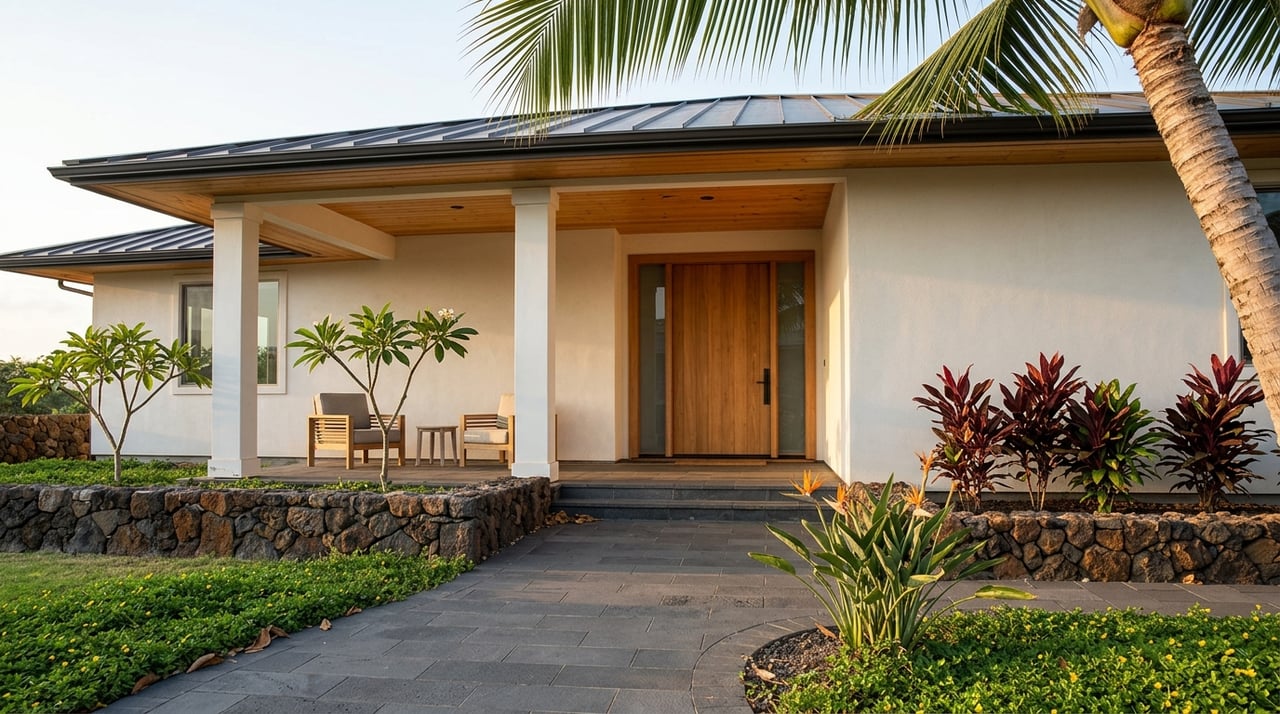
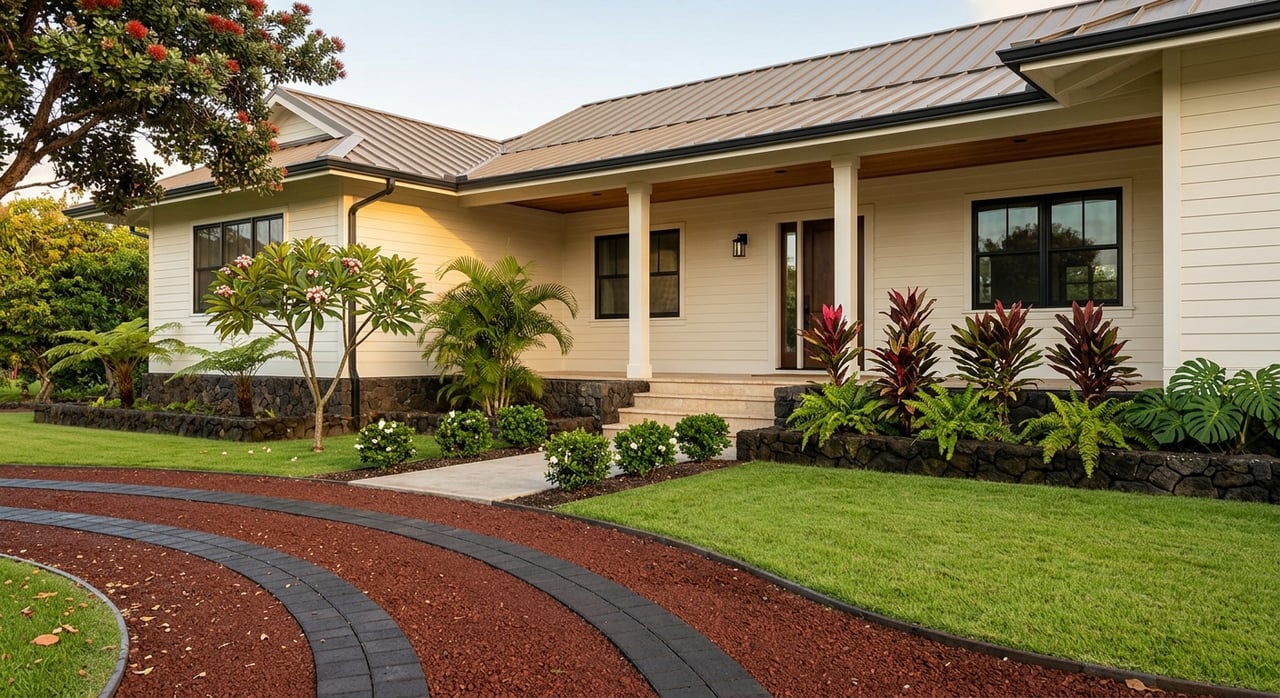
If you picture dense apartment blocks, Keaau may not match that image. Census-based profile data shows 523 housing units, with about 87% in single-unit structures, which points to a housing pattern shaped more by standalone homes than compact multifamily living.
The same profile shows 61% owner-occupied units and an estimated median value of owner-occupied housing of $332,900. Median household income is estimated at $85,000, though it is worth noting that Keaau is a small place, so these estimates come with noticeable margins of error.
Keaau’s population is listed at 1,436 across 6.3 square miles, for a density of 226.8 people per square mile. That low-density profile supports what many buyers notice right away: the area generally feels open and spread out.
Lot patterns support a roomy feel
Nearby county records describe the Keaʻau Agricultural Lots and Ola Hou Estates area as one-acre agricultural subdivisions. A rezoning report for a family-agricultural subdivision near the town center also describes a character built around larger, more expansive agricultural lots.
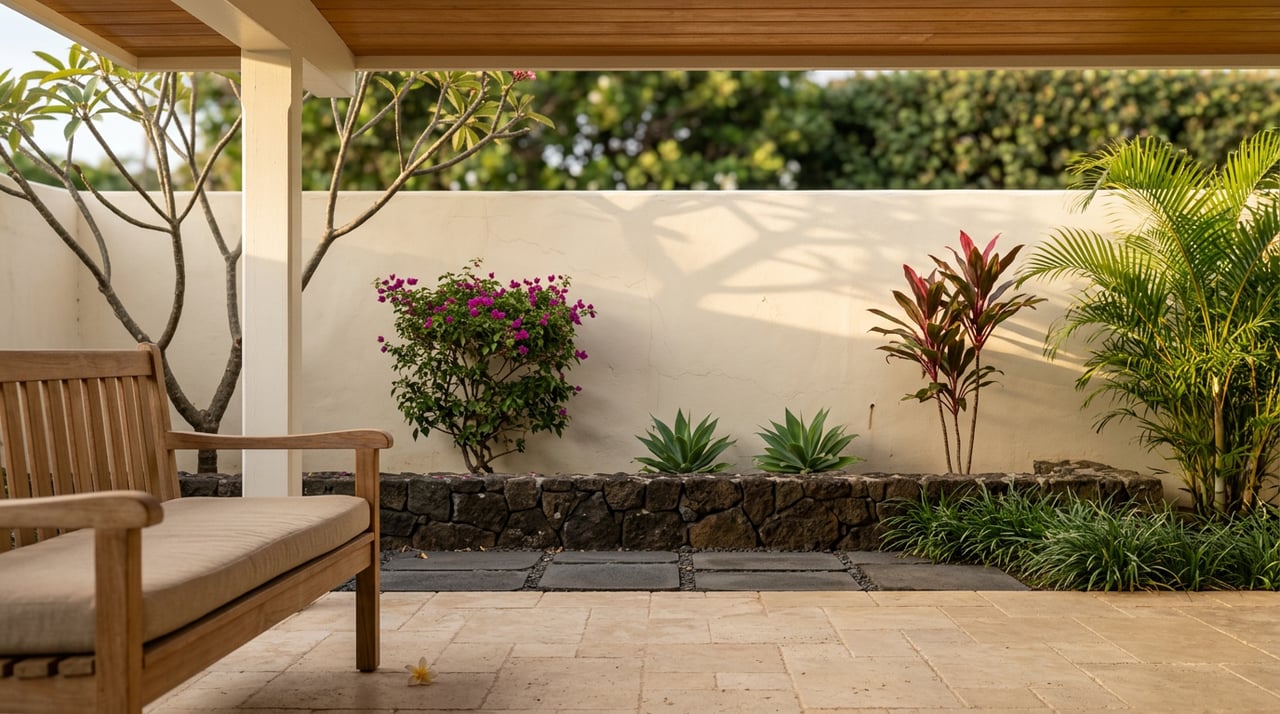
That does not mean every parcel in Keaau follows the same pattern. Still, it helps explain why the area often reads as space-oriented and why buyers looking for yards, privacy, or a little more elbow room may find it appealing.
Everyday errands are manageable locally
A common question about rural living is whether you need to drive far for every small task. In Keaau, many daily basics can be handled close to home.
Keaʻau Shopping Center on Old Volcano Road lists grocery, hardware, natural foods, cafés, casual dining, mail services, and salon services. The center says it was built in 1980 and continues to serve Puna with everyday necessities, which gives residents a practical local anchor for errands.
County planners also specifically identify the middle/high school and the post office next to Keaau Shopping Center as region-serving facilities. That reinforces Keaau’s role as a functional hub, not just a residential area.
What local convenience can look like
For many residents, local convenience in Keaau can include:
- Grocery runs
- Hardware and home project supplies
- Mail services
- Coffee or casual dining
- Basic day-to-day shopping needs
That kind of access can make a real difference if you want a rural setting without feeling disconnected from practical routines.
Hilo access remains part of daily life
Even with local services, Hilo still matters for many regional trips, work routines, and appointments. Keaau is connected to Hilo through Hele-On Route 11, which includes named stops in both places.
County transit planning also describes a Keaau hub-and-spoke concept aimed at making Hilo-to-Keaau service more efficient. That planning focus reflects how important this connection is for East Hawaii mobility.
Still, Keaau remains largely car-oriented. Census Reporter data shows 72% of workers drive alone and 20% carpool, which tells you that personal vehicles remain a major part of everyday transportation.
Commute expectations
The Census Reporter profile shows a mean commute time of 29.9 minutes. That figure helps set expectations if you are comparing Keaau with denser locations where jobs, shopping, and services may be closer together.
State planning materials describe Puna as infrastructure-light, with limited connectivity and multimodal options. In practical terms, that means the town center and transportation planning carry extra importance here.
Climate is warm and very wet
If you are moving from the mainland, Keaau’s climate may feel both familiar and surprising. Using East Hawaii climate data from Hilo International Airport as a reasonable proxy, the mean annual temperature is 74.0°F, with average highs generally in the upper 70s to low 80s and lows mostly in the mid-60s to around 70°F.
There is not much seasonal temperature swing, so the area stays warm through the year. For many buyers, that consistency is part of the attraction.
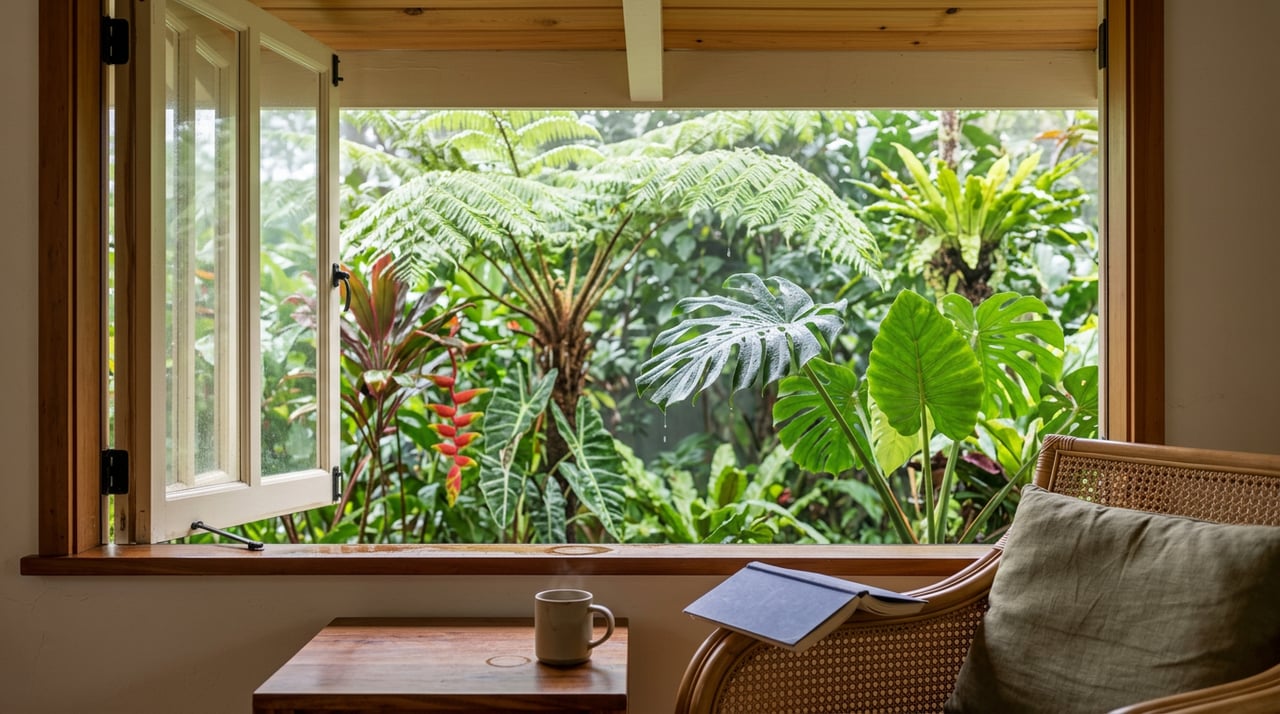
Rain is another major part of the picture. The same NOAA normals show annual precipitation of 120.39 inches, which is very wet by mainland standards and important to keep in mind as you think about landscaping, maintenance, and your general comfort with East Hawaii weather.
Recreation adds to the lifestyle
Living in Keaau can also mean easier access to some of East Hawaii’s outdoor and cultural attractions. Nearby options give you ways to enjoy the island without needing a packed weekend schedule.
Lava Tree State Monument in Puna features lava tree molds and a loop trail. It is a good example of how the island’s volcanic history becomes part of the everyday landscape.
Pana‘ewa Rainforest Zoo & Gardens is located about 6 miles from downtown Hilo and is described by the county as the only zoo in the United States set in a tropical rainforest. Wailoa River State Recreation Area in Hilo offers 132 acres with walking, picnicking, fishing, and cultural amenities.
The Big Island backdrop matters
Keaau’s setting comes with a volcanic context that long-term buyers should understand in a practical way. USGS notes that Kīlauea’s East Rift Zone has had long-running eruptive activity and that the 2018 lower East Rift Zone eruption occurred in lower Puna.
That does not define daily life in Keaau, but it is part of the broader planning and ownership picture on Hawaii Island. For many buyers, the key is to approach the area with clear expectations about island conditions, infrastructure patterns, and long-term property planning.
Who Keaau may fit best
Keaau may be a strong fit if you want a home setting that emphasizes space over density. Buyers who value yards, privacy, and a quieter pace often find this style of living more aligned with their goals than more compact residential areas.
It can also work well if you like having a local commercial core for essentials while keeping Hilo within reach for broader needs. That balance is one of Keaau’s defining traits.
On the other hand, if you want highly connected infrastructure, many transportation options, or a more urban street pattern, Keaau may feel too rural. Knowing which tradeoffs matter most to you is the best starting point.
Why buyers pay attention to Keaau
Keaau stands out because it offers something many Big Island buyers are looking for: breathing room with function. It combines low-density living, a recognizable town center, access to essentials, and a location that still connects into the wider East Hawaii network.
For some buyers, that means a chance to enjoy a more grounded pace of life. For others, it means finding a property type that supports long-term goals like more outdoor space, land, or a home that feels less crowded.
If you are exploring Keaau or comparing it with other Hawaii Island areas, working with a local-minded brokerage can help you better understand how home type, land use, access, and lifestyle all come together. If you are ready for guidance on homes, land, or investment property in Hawaii, connect with Tracy Kalama.
FAQs
What is Keaau like for daily living on the Big Island?
- Keaau generally feels rural and spacious, but it also functions as a regional town center in Puna with shopping, mail services, and access to Hilo.
What types of homes are common in Keaau, Hawaii?
- Available housing data shows that most housing units are single-unit structures, which supports a lower-density pattern centered more on standalone homes than dense apartment living.
Is Keaau a good place if you want more land or yard space?
- Many buyers consider Keaau for its roomy feel, and nearby one-acre agricultural subdivision patterns help explain why the area often appeals to people who want more outdoor space and privacy.
Can you do everyday errands locally in Keaau?
- Yes, many basics can be handled locally, including groceries, hardware, mail services, coffee, and casual dining at Keaʻau Shopping Center.
How do people get from Keaau to Hilo?
- Keaau is connected to Hilo by Hele-On Route 11, but the area is still mostly car-oriented, with most workers driving alone or carpooling.
What is the weather like in Keaau throughout the year?
- Keaau has a warm East Hawaii climate with little seasonal temperature change, and nearby Hilo climate normals show very high annual rainfall compared with many mainland areas.
What should buyers know about the Big Island setting around Keaau?
- Buyers should understand that Keaau is part of a rural East Hawaii environment with lighter infrastructure patterns and a broader volcanic island context tied to Kīlauea and lower Puna history.